 0
0
 0
0 English
 Español
 Français
There's nothing quite like the thought of sinking into your personal outdoor spa after a long day, letting the warm, bubbling water melt your stress away. But imagine lifting the cover to find unsightly rings, discolored streaks, or a gritty film along the surfaces. Suddenly, that vision of pure relaxation is tainted by the looming chore of cleaning.
As of January 2026, we’ve seen a wonderful evolution in hot tub care, moving towards smarter, more preventative, and eco-friendly solutions. Yet, stains remain a common frustration for owners. These blemishes are more than just an eyesore; they can indicate underlying issues with your water chemistry or signal damage to your spa's components .
The good news? A pristine, inviting hot tub is within your reach. This guide will serve as your complete resource for understanding, removing, and—most importantly—preventing the two main types of stains: those from organic grime and those from mineral deposits. Let's get your sparkling sanctuary back.
Table of Contents
1.Decoding the Stains: Identifying Organic vs. Mineral Culprits
2.The Battle Plan: Step-by-Step Stain Removal Techniques
3.Prevention is the Best Cure: Your Proactive Maintenance Checklist for 2026
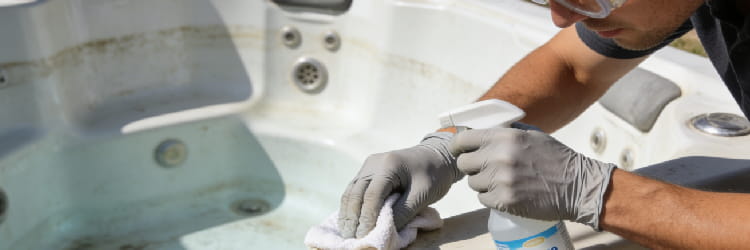
Decoding the Stains: Identifying Organic vs. Mineral Culprits
Before you can effectively treat a stain, you must first play detective. Stains in your outdoor tub almost always fall into two categories: organic or mineral. Knowing the difference is crucial because each requires a unique removal strategy.
Organic Stains: The Scum Line and Biofilms
Organic stains are caused by carbon-based compounds introduced into your spa. Think of them as the residue of life and leisure.
- Common Causes:The primary culprits are substances we bring into the water on our bodies. This includes body oils, sweat, cosmetics, sunscreens, and hair products . External organic matter like leaves, pollen, berries, and dirt can also be blown into the tub, where they decompose and release tannins that stain surfaces . If water isn't properly sanitized, this organic waste becomes food for bacteria, algae, and mold, leading to further staining and slimy biofilms .
- Appearance and Feel:Organic stains typically present as a greasy or slimy ring around the waterline, often called the "scum line." The color can range from yellow to brown or green . Algae will appear as patches of green, yellow, or even black, while mold and mildew create distinct dark spots. These stains usually feel slippery or slimy to the touch.
Mineral Stains: Hard Water and Metal Woes
Mineral stains are the result of inorganic elements—dissolved metals and minerals—falling out of solution and bonding to your hot tub’s shell.
- Common Causes:The source is almost always your water itself, especially "hard water," which has high levels of dissolved minerals, or untreated well water . When water temperature, pH, or alkalinity fluctuates, these minerals can no longer stay dissolved and precipitate out as scale and stains . The main offenders are calcium and magnesium (which cause scale), as well as metals like iron, copper, and manganese .
- Appearance and Feel:Unlike slimy organic stains, mineral deposits are often rough and crusty.
- Scale (Calcium & Magnesium):This is the most common mineral issue, appearing as white or grayish-white, sand-like crystals. It feels like sandpaper and can build up on the shell, in jets, and inside your heater, drastically reducing efficiency .
- Metal Stains:These manifest as discoloration of the spa shell itself. Iron leaves behind reddish-brown, rusty stains. Copper results in vibrant green or blue-green streaks. Manganese can create unsightly purplish or black stains .
To make identification easier, here’s a quick reference table:
|
Stain Characteristic |
Organic Stains |
Mineral Stains (Scale) |
Mineral Stains (Metals) |
|
Common Colors |
Yellow, Brown, Green |
White, Grey |
Red-Brown (Iron), Blue-Green (Copper), Black/Purple (Manganese) |
|
Typical Location |
At or above the waterline ("scum line") |
All surfaces, inside jets, on heater element |
Discolored patches on the shell surfaces |
|
Texture |
Slimy, Greasy, Slippery |
Rough, Crusty, Sandy, Crystalline |
Typically just discoloration, not a raised texture |
|
Primary Causes |
Body oils, lotions, cosmetics, leaves, algae, biofilm (Web Pages 1, 5, 6) |
High calcium/magnesium content, high pH, high alkalinity (Web Pages 8, 9, 21) |
Dissolved metals in source water, equipment corrosion (Web Pages 11, 15) |
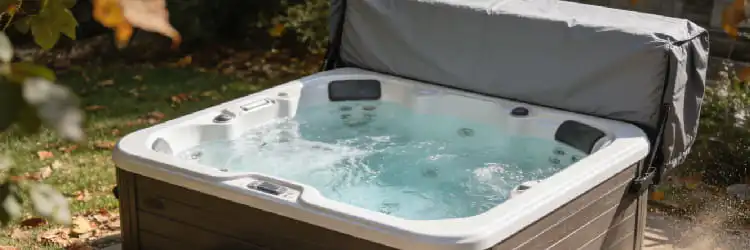
The Battle Plan: Step-by-Step Stain Removal Techniques
Once you’ve identified your foe, it’s time to choose your weapon. Remember to always test any cleaning product on a small, inconspicuous area first.
Tackling Organic Grime and Biofilms
For scum lines and general organic buildup, the approach is to scrub, purge, and oxidize.
- Lower the Water Level:Drop the water level a few inches to fully expose the grimy ring around the shell.
- Scrub the Surface:Use a soft cloth or non-abrasive scrubbing pad with a specially formulated hot tubsurface cleaner. Crucially, avoid using household soaps or detergents. These can introduce phosphates that feed algae and create a nightmarish foam problem that is very difficult to resolve .
- Purge the Plumbing:Organic waste doesn’t just stick to the shell; it builds up inside the pipes, creating a hidden biofilm. Before draining your tub, use a "plumbing purge" or enzyme-based pipe cleaning product. You add it to the old water and run the jets for the recommended time. You’ll be shocked (and disgusted) by the gunk it flushes out of the system.
- Drain, Rinse, and Refill:After purging, drain the tub completely. Give the shell a thorough rinse to wash away all loosened debris and cleaning residue before refilling with fresh water.
- Shock the New Water:Once refilled, immediately test, balance, and "shock" the water with a super-dose of your sanitizer (like chlorine or bromine). This oxidizes any remaining contaminants and establishes a strong sanitizer base .
- Deep Clean Your Filter:Your filter is your first line of defense. After this entire process, give it a deep clean with a chemical filter cleaner to remove all the trapped oils and particles.
Dissolving Mineral Deposits and Scale
Removing mineral stains requires a chemical approach to dissolve the bonded minerals.
- For Light Scale (Calcium):If you catch it early, you can often treat it without draining. Use a scale-defense product that contains gentle acids or chelating agents designed to slowly dissolve the buildup over time . Maintain a proper pH level (7.4-7.6) to help this process. For a spot treatment on an empty tub, a cloth soaked in white vinegar can be effective, but you must rinse the area thoroughly afterward .
- For Heavy Scale:For stubborn, widespread scale, a "drain and acid wash" may be necessary. This involves emptying the hot tuband carefully using a more potent descaling solution designed for spa surfaces. Always wear gloves and eye protection and ensure proper ventilation when using acidic cleaners. Follow the product's directions precisely and rinse the shell multiple times before refilling.
- For Metal Stains:The key to removing metal stains is using a metal sequestering or chelating agent. These amazing products work on a molecular level. They don’t "destroy" the metal, but rather they "grab" onto the metal ions in the water and pull them back into solution, holding them in suspension so they can be filtered out.
- Add the metal control product to the water as per the directions.
- Circulate the water by running the jets for several hours. You may see the water become cloudy or change color as the metals are pulled into suspension—this is normal!
- After the treatment, clean your filter thoroughly. It will be full of the metal particles that the sequestering agent helped it capture . Repeat the process if stains persist.
Prevention is the Best Cure: Your Proactive Maintenance Checklist for 2026
As we embrace wellness and sustainability in 2026, the focus of hot tub care has firmly shifted from reactive cleaning to proactive prevention . A stain-free spa isn't about constant scrubbing; it's about smart, consistent habits and using modern tools to your advantage.
Essential Daily and Weekly Habits
- Rinse Before You Soak:A quick, soap-free shower before getting in removes the vast majority of lotions, deodorants, and body oils that cause organic scum . This is the single most effective preventative measure you can take.
- Keep it Covered:A quality, well-fitting cover is non-negotiable. It keeps out leaves, dirt, and UV rays that can degrade your water chemistry and shell .
- Skim Debris Promptly:Don't let leaves or bugs sit and decompose. Skim them out as soon as you see them.
- Maintain Your Filter:Rinse your filter cartridge with a hose weekly and perform a deep chemical clean monthly. A clean filter is essential for removing both organic and mineral contaminants.
The Unbeatable Power of Balanced Water Chemistry
Your water’s chemistry is the invisible force that prevents most stain issues. Unbalanced water is the direct cause of most mineral precipitation. Test your water 2-3 times per week and aim for these ranges:
- pH (7.4 – 7.6):This is the most critical factor for scale. If pH drifts too high (becomes more alkaline), calcium will rapidly fall out of solution and form scale .
- Total Alkalinity (80 – 120 ppm):Think of alkalinity as the anchor for your pH. It helps prevent wild pH swings.
- Calcium Hardness (150 – 250 ppm):This measures the amount of dissolved calcium. It's a balancing act: too low, and the water can become corrosive; too high, and you risk scale formation .
- Sanitizer (Chlorine/Bromine):A consistent level of sanitizer prevents the growth of algae, bacteria, and mold .
Modern Tools in Your Arsenal: The Eco-Friendly Approach
The 2026 market offers incredible preventative tools that are both effective and environmentally conscious .
- Attach a Hose Pre-Filter:If your home has hard water or you use well water, this is a game-changer. It's a simple cartridge that attaches to your garden hose and removes metals like iron and copper, along with other minerals, before they ever enter your outdoor spa .
- Use a Weekly Stain & Scale Control Product:This is your insurance policy against mineral buildup. These products are sequestering agents that you add weekly to proactively lock up any minerals in the water, preventing them from ever staining your shell .
- Embrace Enzyme-Based Water Conditioners:This is perhaps the biggest trend in eco-friendly spa care. Enzymes are natural proteins that excel at one thing: breaking down organic waste . By adding an enzyme product weekly, you are continuously destroying the oils, lotions, and other gunk that form scum lines and feed bacteria. This reduces the demand on your sanitizer, leading to cleaner water with fewer chemicals and no "bathtub ring" .
- Consider Advanced Sanitizing Systems:Systems like ozonators or mineral cartridges work alongside your traditional sanitizer to kill contaminants. This reduces the overall chemical load, creating a healthier environment that is less prone to the kind of chemical reactions that can cause staining and corrosion .
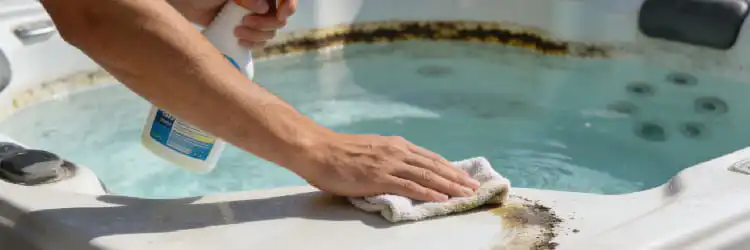
Keep Your Hot Tub Gleaming for Years to Come
Achieving and maintaining a flawless hot tub finish isn't a secret art. It's a science based on a simple three-part philosophy: Identify, Remove, and Prevent.
By understanding the difference between an organic scum line and a mineral scale deposit, you can choose the right tool for the job. But more profoundly, by embracing the proactive, eco-conscious maintenance strategies of 2026, you can stop stains before they ever start.
Consistent water balancing, combined with the modern power of hose pre-filters, weekly sequestering agents, and natural enzyme treatments, forms a shield around your investment. This approach not only keeps your outdoor spa looking brand new but also reduces your reliance on harsh chemicals, saves you time on scrubbing, and ensures your personal oasis is always ready for a crystal-clear, worry-free soak. The reward is pure, uninterrupted relaxation—and that’s what hot tub ownership is all about.
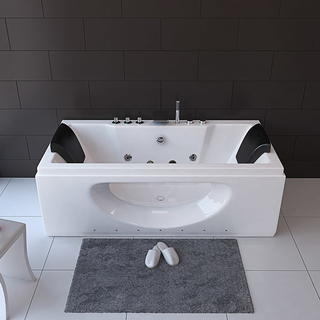
_02-2.jpg?imageView2/2/w/320/h/320/format/jpg/q/75 "Whirlpool Massage Bath SPA RL-6155/1570")
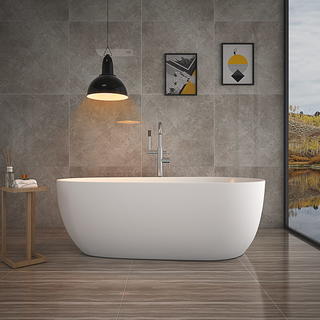
-2.jpg?imageView2/2/w/320/h/320/format/jpg/q/75 "67'' Oval Freestanding Bathtub RL-MF1235/1708")

.jpg?imageView2/2/w/320/h/320/format/jpg/q/75 "Glass freestanding shower cabin shower RL-513(B)")

_sherry_01.jpg?imageView2/2/w/320/h/320/format/jpg/q/75 "Steam Cabin RL-D04(B)-Sherry")
_01.jpg?imageView2/2/w/320/h/320/format/jpg/q/75 "Adult bathtub cabin shower room steam RL-D03(B)")
 Contact us


 Leave A Message