 0
0
 0
0 English
 Español
 Français
Table of Contents
1.The First Hurdle: Understanding Local Government Permits
2.Navigating the Maze of Zoning Laws
3.The Electrical Code: A Non-Negotiable for Safety
4.Beyond City Hall: Getting Approval from Your HOA
5.Your Path to a Smooth Installation: A Final Checklist
1.The First Hurdle: Understanding Local Government Permits
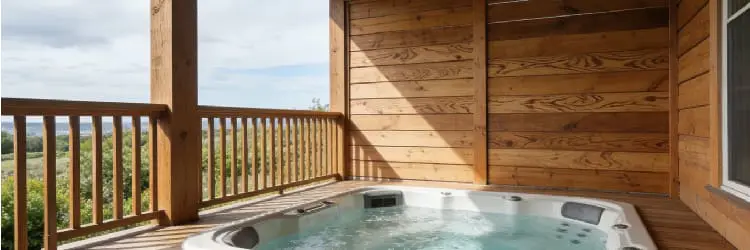
The most common requirement you'll face is obtaining a permit from your local municipal building department. While it might seem like bureaucratic red tape, these permits are essential for ensuring your installation is safe and structurally sound. The rules are not uniform across the country; they can vary dramatically from one state, county, or even city to the next .
What Triggers a Permit Requirement?
While you should always check with your local building department, several factors almost universally trigger the need for a permit.
- Depth and Water Volume:Many jurisdictions draw the line at a water depth of 24 inches. Any vessel, including a hot tub, designed to hold water deeper than this typically requires a building permit .
- Size and Type:The distinction often lies between portable, "plug-and-play" models and larger, hard-wired units. While some small, self-contained units that use a standard outlet might be exempt in certain areas, larger, permanent installations almost always require official approval .
- Electrical Work:Since most hot tubs require a 220-240V dedicated circuit, an electrical permit is a near-universal requirement. This is purely a matter of safety to prevent fire and electrocution hazards .
- Location and Foundation:Placing a hot tub on a newly constructed deck or any elevated structure is a major trigger for a permit. A filled hot tub can weigh thousands of pounds, and your local building authority will want to ensure the supporting structure can handle the load . The permit application for this may require engineered drawings.
The Different Types of Permits You Might Encounter
Obtaining approval isn't always a one-and-done deal. Depending on the complexity of your project, you might need a package of permits.
- Building Permit:This is the primary permit covering the hot tub's installation, foundation (e.g., concrete pad), and any associated structures like a deck or gazebo. When applying, you will likely need to submit documents such as a site plan showing the location, product specifications, and details of the foundation .
- Electrical Permit:This is separate from the building permit and is arguably the most critical. It covers all the electrical work, from running the dedicated circuit to installing the GFCI protection and emergency disconnect. This work must be inspected to ensure it complies with the National Electrical Code (NEC) and local amendments .
- Plumbing or Mechanical Permits:In some cases, if your installation involves complex connections to your home's plumbing for filling and draining, or includes sophisticated gas heaters, you may also need a plumbing or mechanical permit .
The key takeaway is to never assume. A quick call or visit to your local building department's website is the most reliable first step to understanding exactly what your project requires.
2.Navigating the Maze of Zoning Laws
Once you know if you need a permit, the next question is where you can legally place your hot tub. This is governed by local zoning ordinances, which are rules that dictate how land can be used within a community. They ensure that a residential neighborhood maintains its character and that one person's home improvement project doesn't negatively impact their neighbors.
The Golden Rule of Setbacks
The most important zoning concept for hot tub owners is the "setback." A setback is the legally required minimum distance between a structure (like your hot tub) and your property lines, other buildings on your lot, or public rights-of-way .
- Property Line Setbacks:You cannot place your hot tub right up against your neighbor's fence. Common setback requirements range from 5 to 10 feet from the rear and side property lines, though this varies widely by municipality .
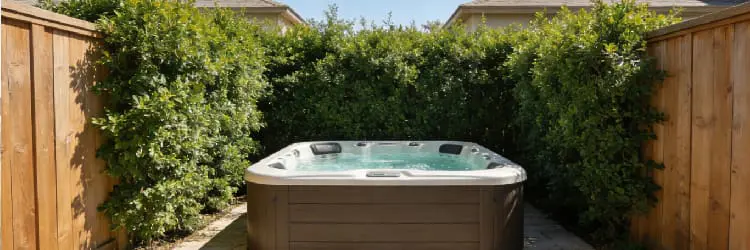
- Placement Restrictions:Zoning laws almost universally prohibit the installation of pools and hot tubs in a front yard . They are typically restricted to the rear yard, and sometimes the side yard, provided setback rules are met.
- Proximity to Other Structures:You may also need to maintain a certain distance from your own house or other accessory buildings on your property .
Electrical Safety Clearances and Fencing
Zoning and safety codes also address critical clearances and barriers to protect you and others.
- Overhead Power Lines:This is a life-or-death rule. A hot tub must never be located under or near overhead power lines. Zoning and electrical codes will specify a minimum horizontal and vertical clearance that must be maintained .
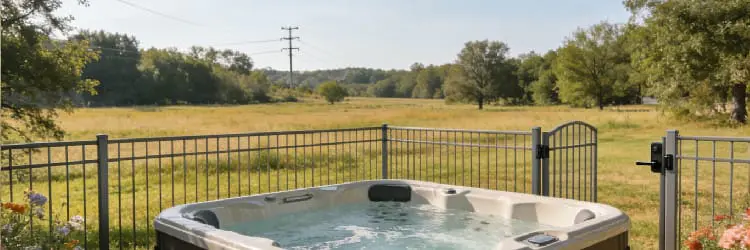
- Safety Barriers:Many local codes treat hot tubs with a water depth over a certain threshold (often 24 inches) the same as swimming pools when it comes to safety. This can mean you are required to have a safety barrier in place to prevent accidental access, especially by young children. This could be:
- A fence of a certain height (e.g., 4 or 5 feet) surrounding the hot tub area with a self-latching gate.
- A powered safety cover that complies with specific standards (like ASTM F1346-91) and can be securely locked .
Codes like the 2024 Uniform Swimming Pool, Spa, and Hot Tub Code (USPSHTC) provide modern, detailed guidelines that many jurisdictions adopt to ensure these installations are safe .
3.The Electrical Code: A Non-Negotiable for Safety
Water and electricity are a deadly combination, which is why the electrical requirements for hot tubs are strict, specific, and not open to interpretation. All installations in the United States must comply with the National Electrical Code (NEC), particularly Article 680, which deals specifically with swimming pools, spas, and hot tubs . Your local jurisdiction will enforce the NEC, sometimes with its own stricter amendments.
Key Requirements of NEC Article 680
While the full code is extensive, here are the core safety mandates you must follow:
- Dedicated Circuit:Your hot tub cannot share a circuit with any other appliance or outlet. It must be powered by its own dedicated circuit running directly from your home's main electrical panel .
- GFCI Protection:The circuit powering the hot tub must be protected by a Ground Fault Circuit Interrupter (GFCI). This life-saving device constantly monitors the flow of electricity and will instantly shut off the power if it detects even a tiny imbalance, which could indicate a dangerous current leak. This is the single most important safety feature to prevent electrocution .
- Manual Disconnect Switch:The code requires an accessible manual shut-off switch, often called a "spa panel" or "disconnect." This switch must be located within sight of the hot tub, but not too close. The typical requirement is for it to be at least 5 feet away but no more than 50 feet away. This allows anyone to quickly and safely cut all power to the tub in an emergency .
- Bonding and Grounding:All metal components in and around the hot tub (such as ladders, metal fencing, or the tub's internal frame) must be "bonded" together with a heavy-gauge copper wire. This creates an equal electrical potential across all components, preventing a dangerous voltage from building up on any one surface .
Why You Must Hire a Licensed Electrician
Unless you are a qualified and licensed electrician, this is not a DIY project. The risks are simply too high. Most jurisdictions legally require that this work be performed by a licensed professional . An electrician will ensure the correct wire gauge is used, all connections are weatherproof and secure, and the installation will pass the mandatory electrical inspection that follows. Investing in a professional is a small price to pay for the safety of your family and guests.
4.Beyond City Hall: Getting Approval from Your HOA
If you live in a community governed by a Homeowners Association (HOA), you have an additional layer of rules to follow. The HOA's primary goal is to protect property values and maintain a cohesive aesthetic throughout the neighborhood . Their rules, outlined in a document called the Covenants, Conditions & Restrictions (CC&Rs), are legally binding. Even if you get a permit from the city, you can still be fined or forced to remove your hot tub if you violate HOA rules.
The HOA Approval Process
Ignoring your HOA is a recipe for disaster. Before you even purchase your hot tub, your first step should be to review your CC&Rs and contact your HOA's Architectural Review Committee (ARC) or management board.
The typical process involves submitting a formal application that includes:
- A site plan showing the proposed location.
- The make, model, and color of the hot tub.
- Details on any associated construction (deck, patio, gazebo).
- A landscaping plan showing how the unit will be screened from view .
You must wait for written approval from the HOA before any work begins .
Common HOA Hot Tub Rules and Restrictions
While the specifics vary greatly between communities in states like California, Texas, and Florida, the principles behind HOA rules are quite consistent .
- Aesthetics and Screening:This is often the HOA's biggest concern. They want to minimize the visual impact on neighbors. Many HOAs require the hot tub to be completely shielded from view from neighboring properties and common areas. This is usually accomplished with privacy fencing, dense landscaping, or integration into a deck design . For example, some California HOAs explicitly state that hot tubs need approval for materials, location, design, and color to ensure minimal visual impact .
- Placement:Like zoning laws, HOAs will almost certainly prohibit installation in a front yard. Most will mandate that hot tubs be placed only in the rear yard .
- Size and Type:Some associations may have rules limiting the maximum size of a hot tub or may prohibit certain types altogether, such as less permanent inflatable models .
- Noise and Light:HOAs may have rules regarding operating hours for pumps or jets to prevent noise from disturbing neighbors, especially at night. They may also have restrictions on associated lighting.
- Safety:The HOA will likely require that the hot tub has a secure, lockable cover to prevent accidents, reinforcing local safety codes .
5.Your Path to a Smooth Installation: A Final Checklist
Bringing a hot tub home is an exciting investment in your well-being. By doing your homework and following the rules, you can ensure the process is smooth and the result is years of safe, worry-free relaxation.
Here is a final checklist to guide you:
- Research Early:Before you fall in love with a specific model, start by investigating the rules. Your dream hot tub might not fit your city's setback requirements or your HOA's aesthetic guidelines.
- Contact Your Local Building Department:This is your primary source of truth. Call or visit their website to ask directly: "What permits and inspections are required to install a hot tub at my address?"
- Review Your HOA's CC&Rs:Find the governing documents for your community and carefully read the sections on "exterior alterations," "ancillary structures," or "pools and spas."
- Submit for Written Approval:Formally submit your plans to your HOA's architectural committee and do not schedule any work until you have their approval in writing.
- Hire Licensed Professionals:Engage a licensed electrician for all electrical work. Use reputable contractors for any deck or concrete pad construction. They will be familiar with local codes and ensure the work passes inspection.
- Schedule and Pass Inspections:Work with your contractors to schedule all required municipal inspections (e.g., structural, electrical). Do not use your hot tub until you have received final approval.
Following these steps will not only keep you in compliance with the law but will also provide the ultimate peace of mind, allowing you to fully relax and enjoy every moment in your beautiful new hot tub.
_02-2.jpg?imageView2/2/w/320/h/320/format/jpg/q/75 "Whirlpool Massage Bath SPA RL-6155/1570")
-2.jpg?imageView2/2/w/320/h/320/format/jpg/q/75 "67'' Oval Freestanding Bathtub RL-MF1235/1708")
.jpg?imageView2/2/w/320/h/320/format/jpg/q/75 "Glass freestanding shower cabin shower RL-513(B)")
_sherry_01.jpg?imageView2/2/w/320/h/320/format/jpg/q/75 "Steam Cabin RL-D04(B)-Sherry")
_01.jpg?imageView2/2/w/320/h/320/format/jpg/q/75 "Adult bathtub cabin shower room steam RL-D03(B)")
 Contact us


 Leave A Message